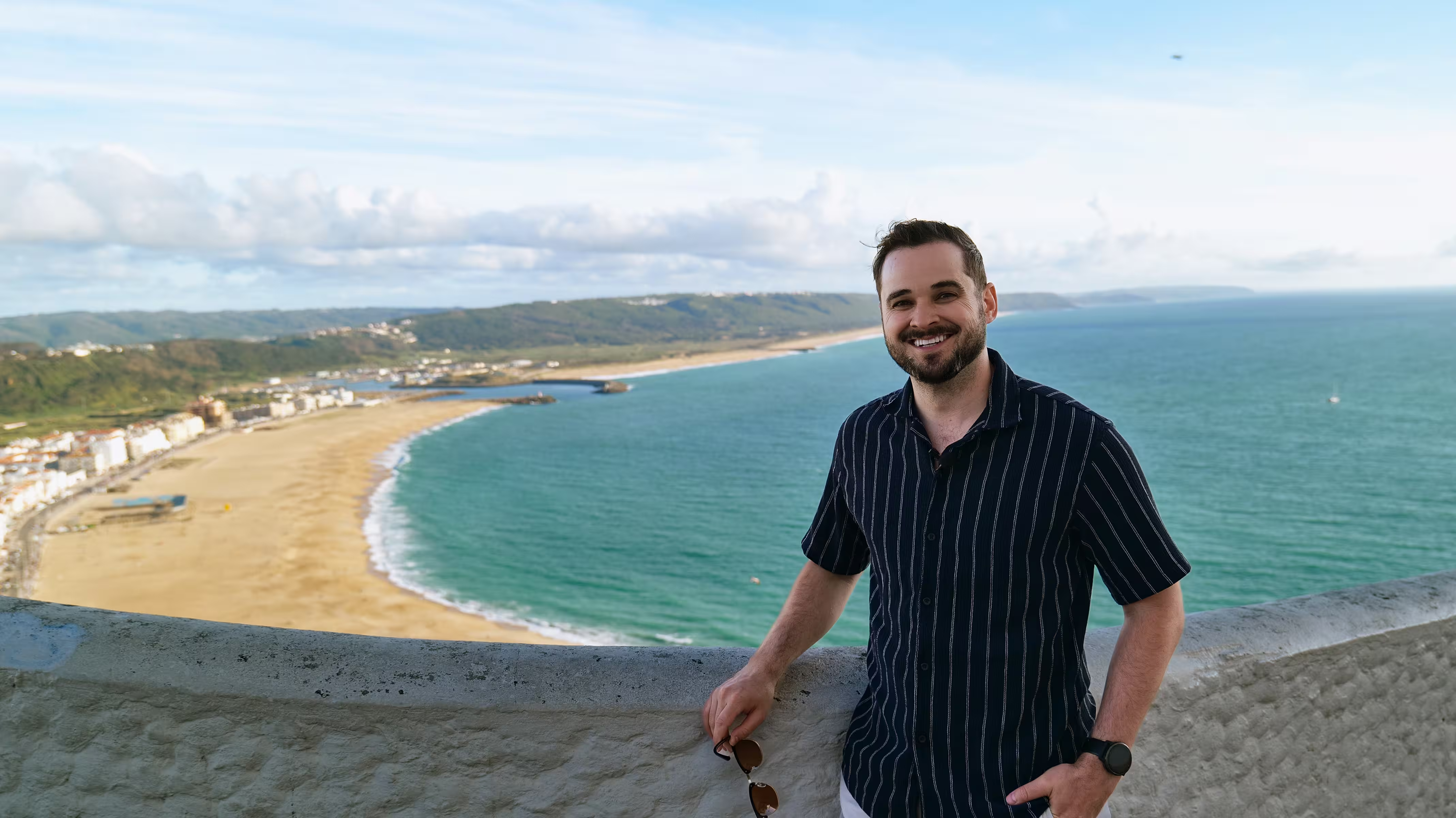
David Nash
Independent Robotics Engineer
Skills
Timeline
- PresentIndependent Robotics Engineer
- 2025 - 2026Creator of StayMapper
- 2020 - 2024Backend Engineer (AWS)
- Summer 2018Research Intern (AFRL)
- 2015 - 2019BSc. Texas A&M
My Robotics Journey
The Tinkering Years
I went to Texas A&M to be a mechanical engineer, because that is the closest thing I could get to robotics at the time. Luckily, the year we had to declare our major, Texas A&M announced a new bachelor's degree track called "Multidisciplinary Engineering Technology" with a focus in Mechatronics. That was exactly what I wanted! I applied immediately and became one of the first 30 students to ever graduate with that degree.
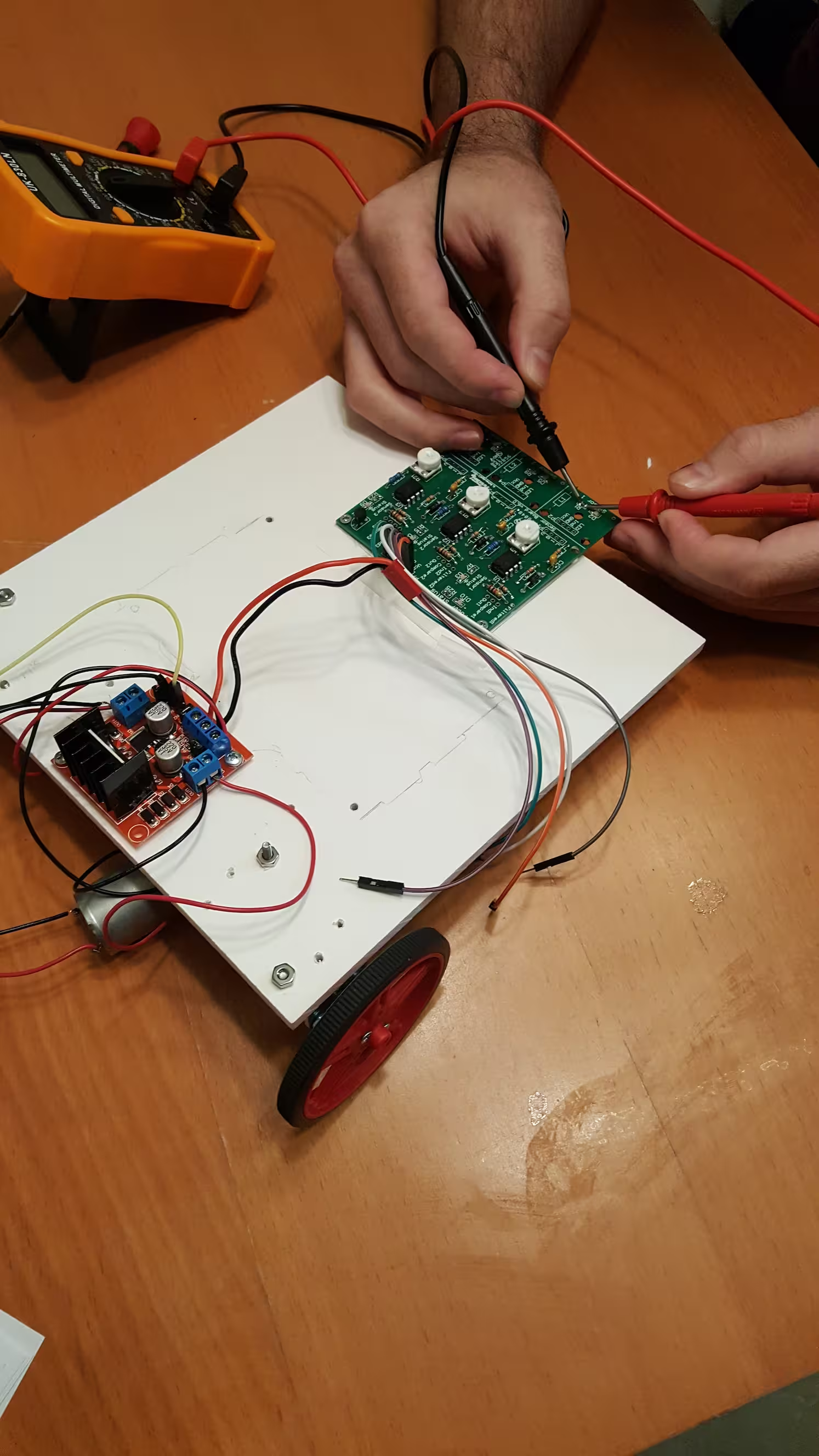
I worked on robots starting from the lowest level up. My rite of passage for each level was simple: make an LED blink. It started with learning MIPS and ARM assembly on a simple LaunchPad evaluation board. We then upgraded to using FPGA, Verilog HDL, and LabVIEW. As I approached my junior year, I upgraded to a BeagleBone with a camera module and Python computer vision to detect shapes—and based on what shape it saw, you guessed it, it would blink a corresponding LED.
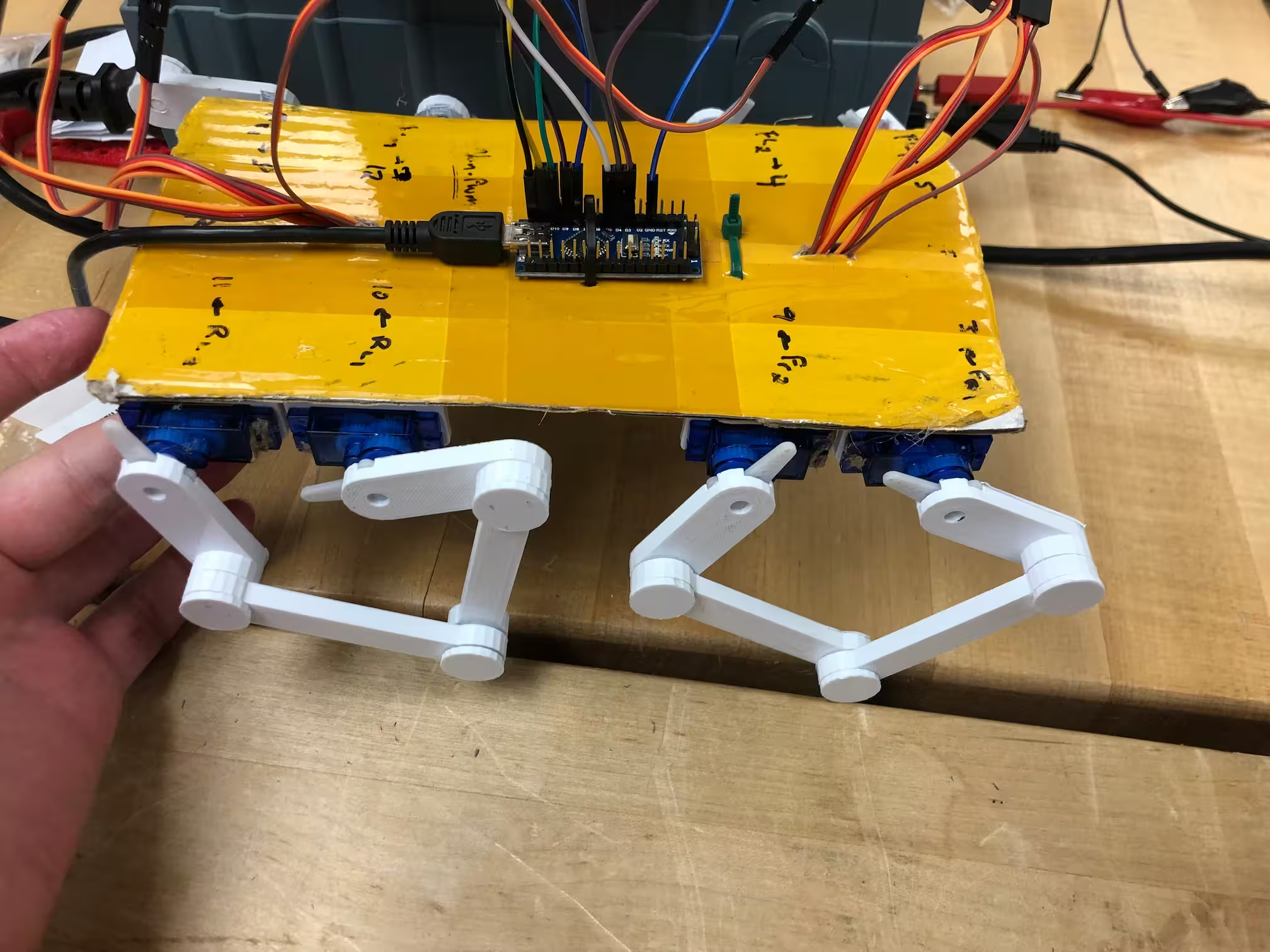
There were other projects too that didn't require any blinking lights: a 2-wheeled robot driven by EMG signals from our arm muscles, a classic line following robot, a terrible but functional 4-servo quadruped, and a strawberry picking 3 DOF arm.
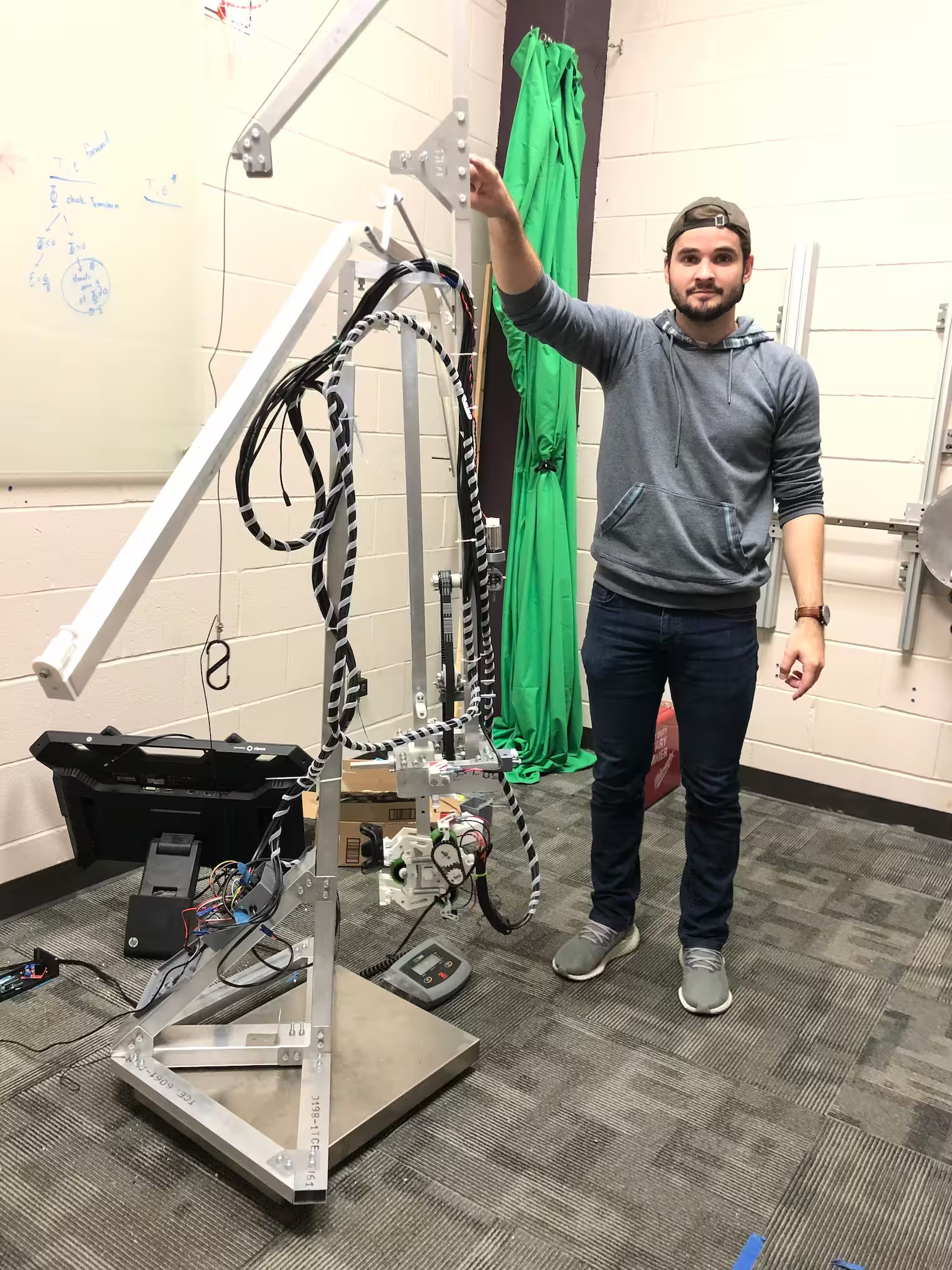
My capstone project was a Mixed Reality Capture Robot. It could record you and a virtual environment at the same time and superimpose the two images, allowing you to give engineering lectures in the same environment as your 3D models, walking around and interacting with them natively.
During a summer internship at the Air Force Research Laboratory (AFRL) in Dayton, Ohio, I worked on real-time peer-to-peer networked VR for collaboration on 3D models for sensitive applications. This exposure to high-level networking and interactive 3D systems broadened my perspective on what engineering technology could achieve.
The Corporate Detour
The time came that all seniors dread: graduation. The application process for a new grad is a nightmare. I went to career fairs, did dozens of interviews, and eventually landed a job with a major company: Amazon.
At this point you may be thinking, "Wow that's awesome! You got a job at Amazon Robotics in Boston!?" Yeah, well, that's what I was thinking at the time too. But as a new grad software hire, you don't really get to choose where you end up. I was offered a job in Seattle as a backend engineer working on the AWS billing system—a system that processes tens of billions of dollars worth of transactions every single month. It sounded really cool, I was burnt out on job hunting, and I was a broke student being offered a 6-figure salary. So I said yes.
Scaling at Amazon
And dangit, guess what? I was GOOD at that job! I worked there for 4 years and took on massive responsibilities early. At the end of year one, I was given my first big project: enable AWS to act as a seller of record in Europe. I had to take data from an upstream team and plumb it through a highly complex web of over 15 different sub-systems owned by different teams. The onus was on me to learn and make it happen—and I did.
I then became an expert in tooling to measure regressions to catch bad code before deployment. I also created a tool that prevented our on-call engineers from being paged at 3 AM by proactively allocating hardware to known slow processes. By the time I left, I was in the process of submitting my promotion document for SDE III (Senior Engineer).
The Self Employed Pivot
Wait, what? You left the company? Well, yeah. I was good at my job and getting handed increasingly complex work, but I could feel a sensation that "this wasn't me". So I quit.
I spent 6 months traveling South America and got inspired to create a full-stack web application called StayMapper. It pulled in massive amounts of GeoJSON data for neighborhoods across 60+ cities worldwide and plotted them on an interactive map. The idea was to help travelers avoid staying in bad locations in unfamiliar cities. It worked beautifully, and it was a phenomenal crash course in full-stack architecture. But then, AI happened, and Google Maps integrated my "killer feature" directly into their app. Marketing was an uphill battle I didn't have the budget to fight. So, RIP StayMapper.
Back to Hardware
And now here I am, back in the robotics scene. I'm doing what I spent so many years tinkering on and experimenting with because I think it's fascinating. When I work on my simulations or my ML models, I don't feel the existential dread I felt working on corporate Java backends. I feel inspired to experiment, explore, and share what I am learning with others.
Now, I help teams bridge the gap between ambitious mechanical designs and production-ready software. I bring the engineering rigor of scaling Amazon backends and apply it directly to robotics and automation. If you have a challenging project and need someone who can navigate both the hardware trenches and cloud architecture, let's build something incredible together.
Let's build together
If this background sounds interesting to you, and you'd like to know more or you'd like to work with me, please feel free to reach out! I can't promise that I'll always be available, but if our calendars line up it would be an honor to collaborate on some really cool robotics projects.